
Sustainability
Sustainable By Nature, Not Just By Name
Every product line in the Sanis Eco catalogue starts as agricultural by-product — coconut shell, cinnamon offcuts, rice husk, clay — that would otherwise be discarded. Nothing is activated, nothing is synthetic, and what can return to the soil, does.
 Earth
Sustainable By Nature
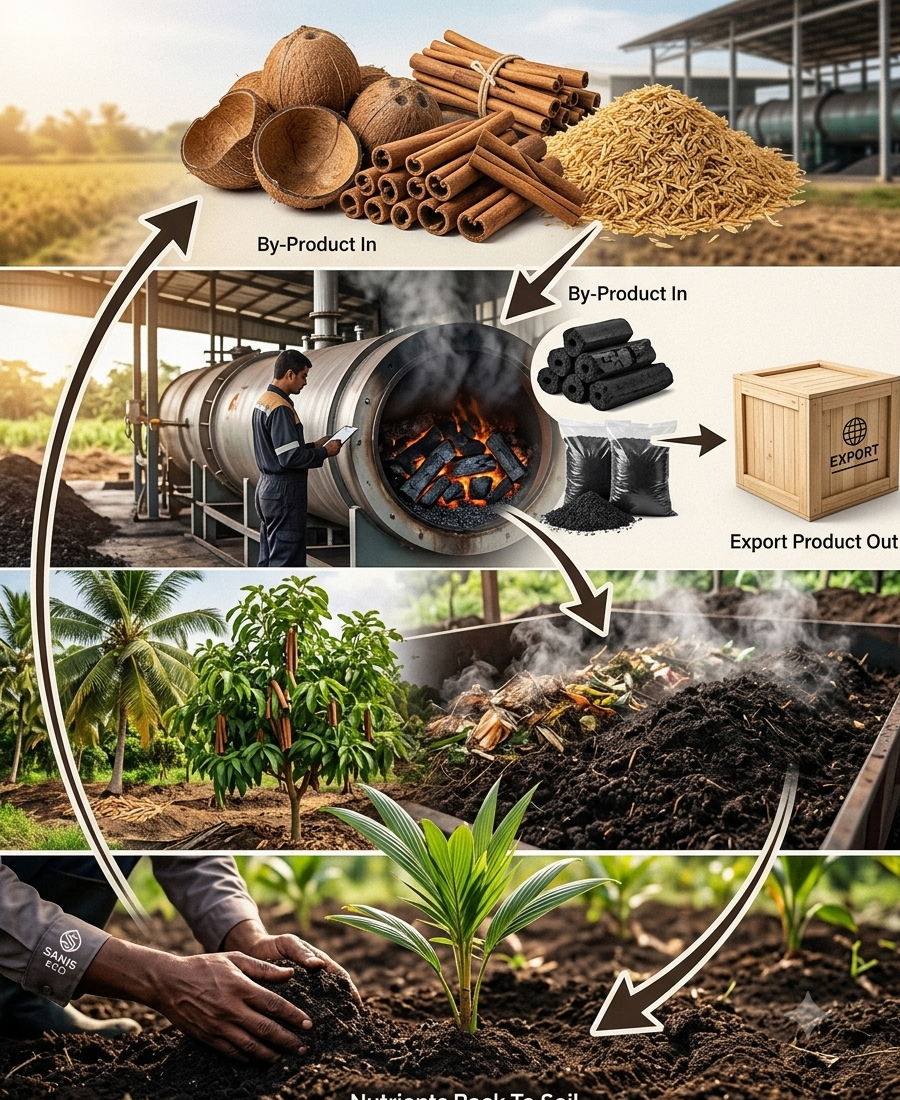
The Closed Loop
By-Product In, Export Product Out, Nutrients Back To Soil
Coconut shell, cinnamon offcuts and rice husk are residues of other industries — food processing, spice production, rice milling. Sanis Eco carbonizes and processes what would otherwise be burned off or discarded, turning it into export-grade charcoal, biochar and compost. The compost line closes the loop entirely, returning organic nutrients to the same agricultural land the raw material came from.
- Raw material — agricultural by-product, not virgin timber
- Activation — none, ever, across any charcoal product
- Additives — no synthetic binders or chemical treatments
- Closed loop — organic compost returns nutrients to Sri Lankan soil
Element By Element
How Each Element Stays Sustainable
Charcoal & Briquettes
Carbonized in controlled kilns from coconut shell and rice husk by-product. No chemical activation, no synthetic binders — just heat, shell, and time.
Cinnamon Charcoal
Made from offcuts of Ceylon cinnamon production — bark and wood that would otherwise be waste from the spice industry.
King Coconut Water
Bottled close to harvest with no added sugar or preservatives — a naturally occurring product with minimal processing.
Pottery & Compost
Terracotta pottery is hand-thrown using traditional, low-impact methods; compost returns organic nutrients directly to farmland.
People & Craft
Built On Local Sourcing & Traditional Craft
Sanis Eco sources coconut shell and rice husk from Sri Lankan mills and processors, cinnamon offcuts from local estates, and works with traditional potters to produce terracotta and clay products by hand. Supporting these existing supply chains and craft traditions — rather than replacing them with industrial alternatives — is part of how the business stays rooted in Sri Lanka.
More About Sanis Eco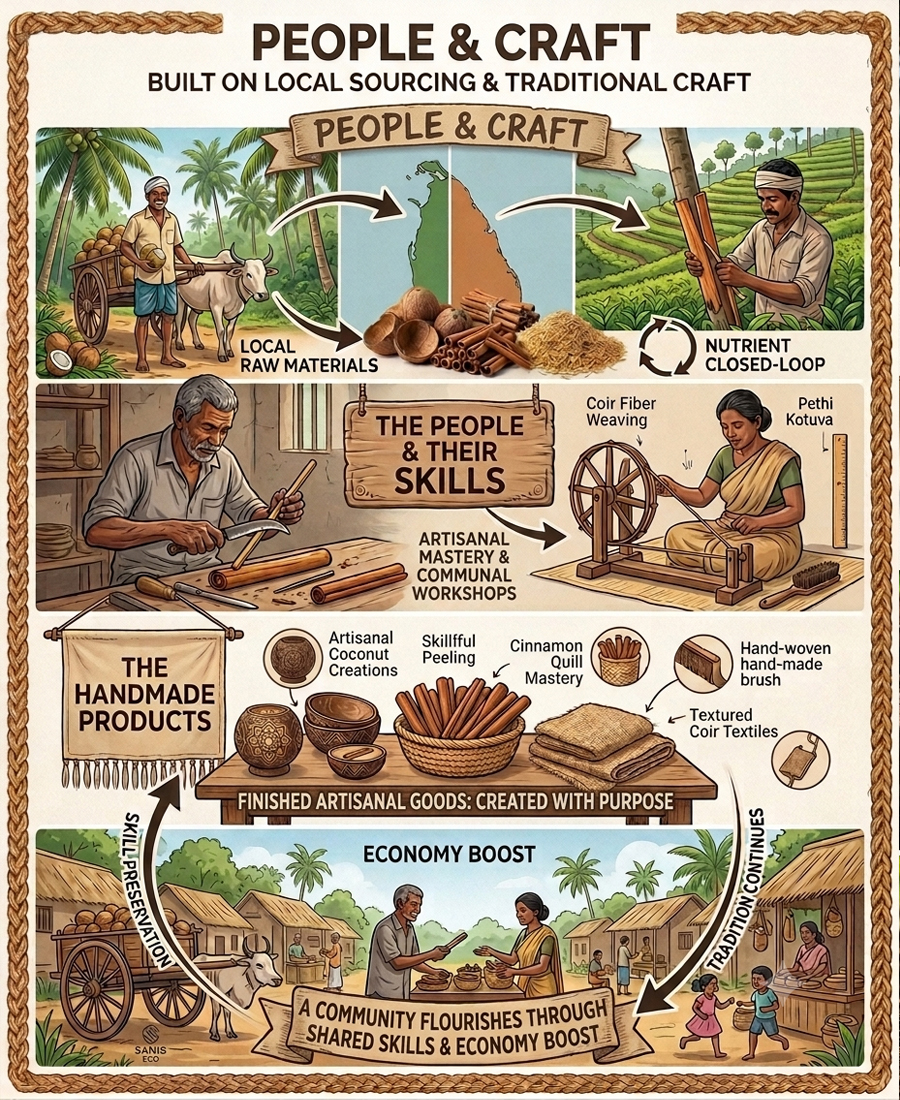 Wood
Sanis Eco Pvt Ltd